
Balcony renovation - how do I renovate my balcony?
Experience shows us that every balcony user is sooner or later faced with a major problem: renovation. The key question is why balconies deteriorate in the first place. If we can answer this, we can avoid the mistakes that are so often made during renovation. This is especially important for the most popular balcony and terrace floors, such as ceramic tiles laid on mineral tile adhesive.
Both balconies and terraces are exposed to large temperature fluctuations, sometimes to really big and rapid changes. On a hot summer day, when the temperature of the balcony or terrace floor can reach up to 80 degrees, it can suddenly start to rain. This rain cools the floor, sometimes by many degrees. The resulting thermal stresses can cause joints or tiles to crack. Water penetrates through such cracks or larger breaks and soaks the layers of the floor. Too much moisture under the floor leads to tiles "rubbing" in summer or "freezing off" in winter. This in turn gives users the impression that it is impossible to build a durable balcony or terrace from ceramic tiles on adhesive. That impression, however, is completely wrong! If you follow a few basic principles when renovating your balcony or terrace, you can avoid potential damage and enjoy your balcony and terrace for years. All the more so because ceramic tile floors are the most user-friendly floors of all.
If you are thinking about renovating your balcony, you should observe the following principles:
- buy only products made by well-known and proven manufacturers,
- the tile adhesive should be class C2S1 or C2S2,
- the ceramic tiles or slabs should have a water absorption of less than 3%,
- the substrate should have movement joints dividing it into areas no larger than 3 x 3 m, and the floor covering 2 x 2 m,
- the tile joints should be no narrower than 5 mm,
- the movement joints should be filled with an elastic sealant suitable for exterior use,
- we grout the tiles only once the mortar has fully set,
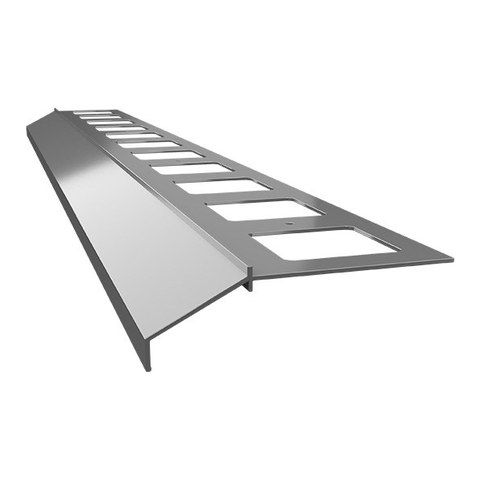
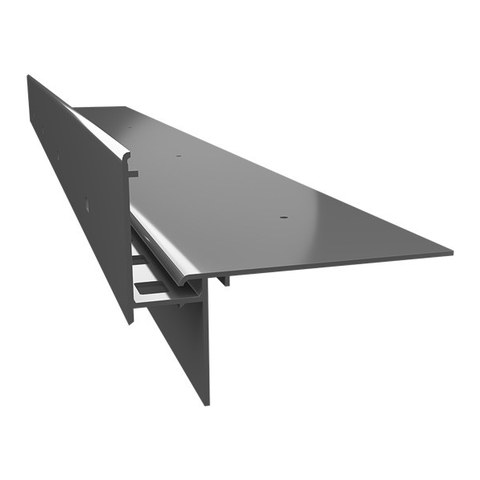
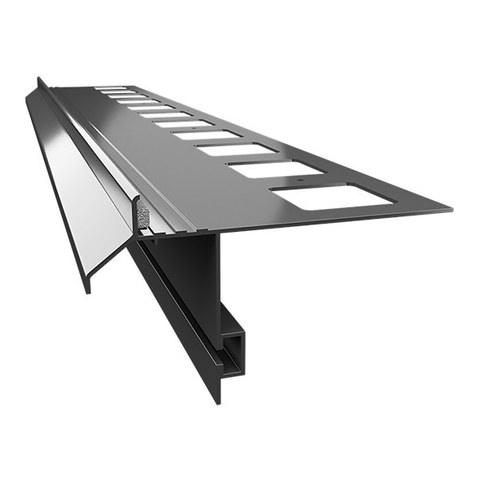
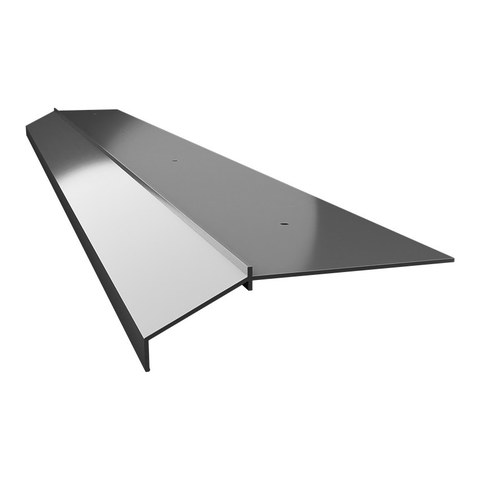
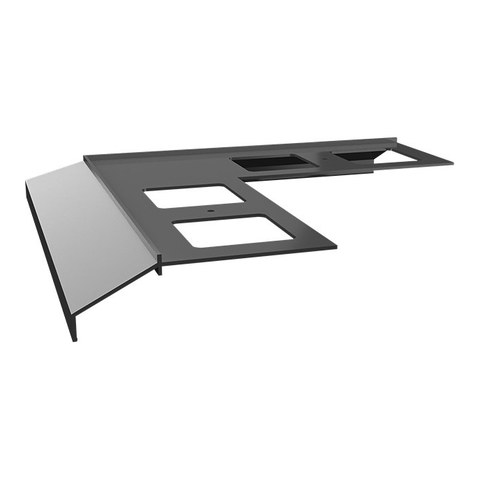
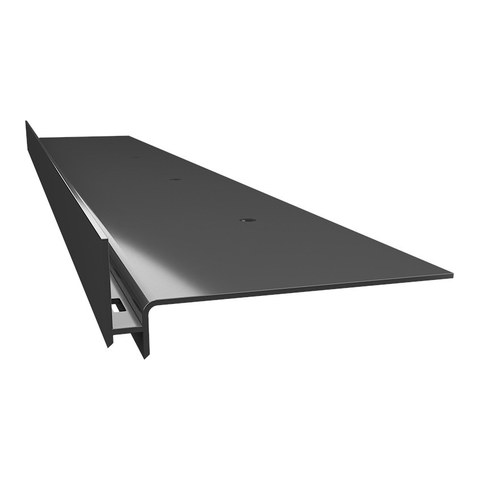
- to drain the substrate properly, we use the right drip edges,
- the drip edges should have a proper anti-corrosion coating,
- the optimum temperature for renovation work on the balcony is 5 to 25 degrees,
- always read the manufacturer's technical instructions supplied with the materials.
One workmanship is not the same as another!
For many years, traditional drip edges for balconies and terraces have been made of coated sheet steel. As we know from practice, however, such drip edges are not durable, especially in contact with materials such as waterproofing slurry or tile adhesive. The anti-corrosion coatings used on sheet steel are not good enough for finishing balcony and terrace edges. Strong environmental exposure at the points where the sheet is fitted causes rapid corrosion. This in turn causes a loss of watertightness in the edge zone of the terrace or balcony and, as a result, total failure. In such a situation you should start renovating the damaged balcony or terrace immediately. If we do not, this can lead to moisture in the building structure and other unfavourable consequences, such as loss of thermal resistance of the walls, the development of mould and fungus in the rooms and, in extreme cases, even structural failure.

The edge zone is where damage to a balcony or terrace begins. If you want to renovate your old balcony, you should make a real effort to do it properly. To achieve this, you should use suitable drip edge profiles. Sheet metal that starts to rust slowly leads to total failure of the front of the balcony. Could this be avoided in any way? Fortunately the answer is: "YES". The latest technologies allow us to protect our balcony well against the effects of climate change.
Increasingly, system aluminium drip edge profiles are used. Why, you may ask? There are a few reasons. System drip edge profiles (roof drip edge profile) are made of aluminium with a lacquer coating and are corrosion-resistant. This is an important reason for the durability of the profiles. Aluminium, like almost any other metal, corrodes. If it is not properly protected, it will quickly fail. All the more so as mineral tile adhesives and waterproofing slurries make the environment very aggressive.
Another advantage of system drip edge profiles is their rigidity and their shape. This has a great influence on correct and fast drainage of the floor of a terrace or balcony.
If you use system drip edge profiles, you will see how quickly and easily they are installed (waterproofing systems for balconies). Please always pay attention to the information provided by the manufacturers of the drip edge profiles, and check whether you receive a guarantee for the way in which you intend to use these profiles.
In summary, you can carry out the renovation of your old balcony yourself and at the same time protect it so that you can enjoy it undamaged for years. Once you know which products to buy for this, you should deepen your knowledge of building. We will report on that in the next articles.