
How can the edge finishes of a raised terrace be done? - Waterproofing a terrace
If the edge finishes of your terrace are done well, you can be sure that you will enjoy your terrace for years. Damage to terraces starts precisely at their edges, regardless of the technology the terrace was built with. Destructive effects often occur at terrace edges. The moisture level in the sub-floor layers is highest there, and temperature fluctuations add to it. All of this causes damage and shows that the methods used until now have not proved their worth.
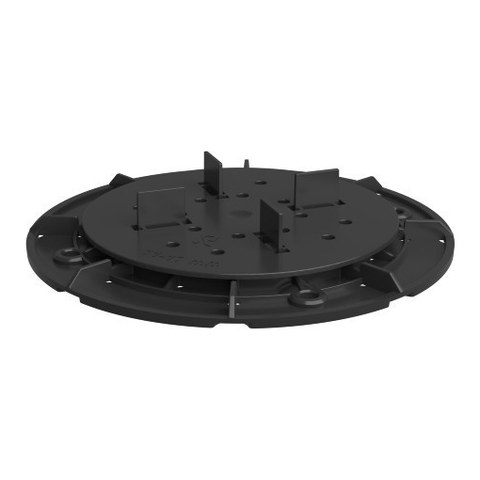
In recent years, terraces and balconies with a raised, ventilated floor have become increasingly popular. With this technology, the floor is made of thick stone, concrete or ceramic slabs laid on specially made pads (mostly plastic). The substrate for such a floor is a cement screed topped with a waterproofing layer. The insulation is most often made from roll materials such as bitumen felt, PVC membrane or EPDM. However, the insulation can also be made from sealing slurry (manufacturer approval is required here) or from bituminous thick coatings (KMB).
The terrace substructure is designed to allow for joints of 1.5 - 2 mm between the tiles; rainwater flows down through these onto the waterproofing and then, thanks to a correctly formed slope, on to the drip edge profile and thus out beyond the terrace or balcony.
The most important thing is to do the edge finishes of the terrace correctly, i.e. so that rainwater is drained outwards and the tiles are at the same time stabilised in the edge area. If the tiles have no firm support, they shift more and more in the edge area, and with them the whole floor. This in turn leads to complete destabilisation.
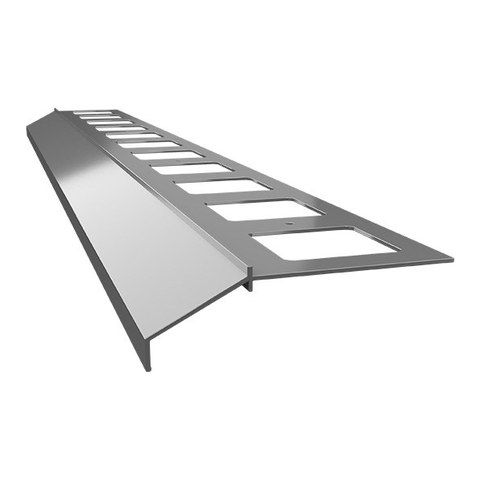
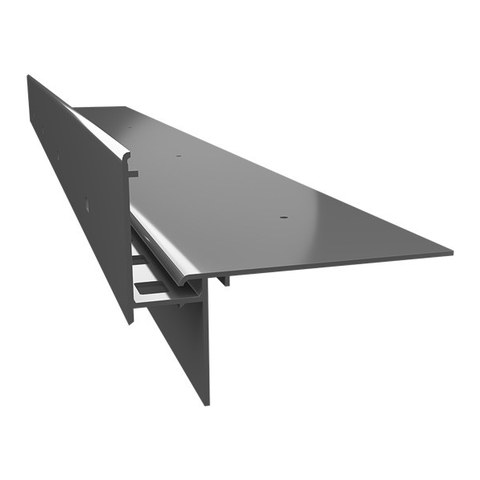
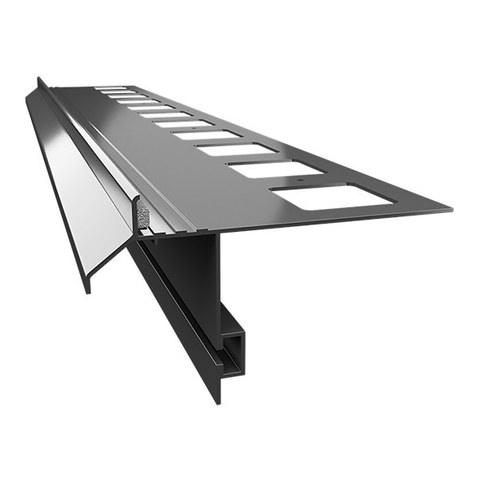
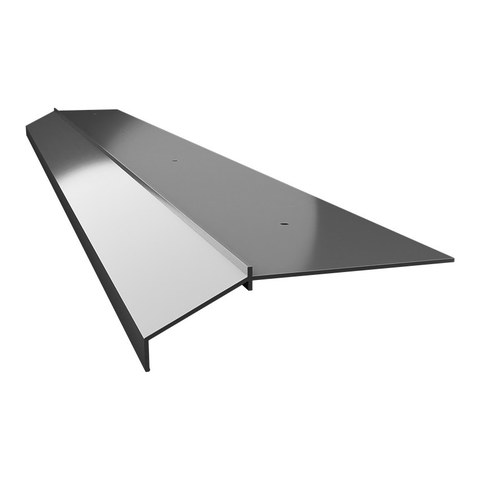
There are terrace constructions from various manufacturers on the market, made for different installation variants. When it comes to drip edge profiles for finishing terrace edges, however, only Westermayr has profiles for such applications in its range.

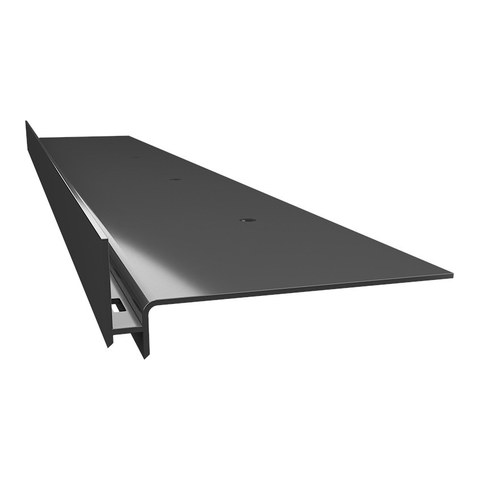
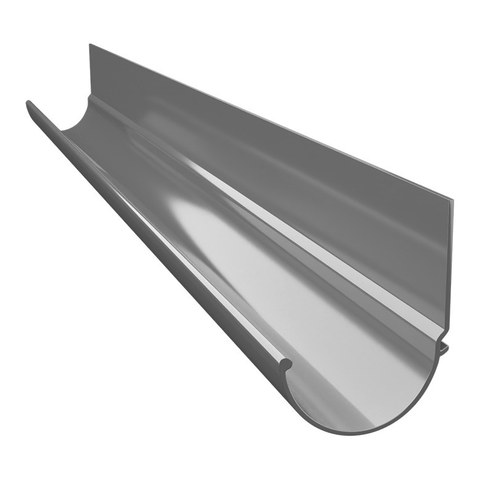
These are the W30 and W30 R profiles. The difference between the two is that only with the W30 R profile can you fit the system gutter hook. This is not the case with W30.
The profiles are made of top-quality aluminium and coated with anti-corrosion protection. This material ensures full resistance to the effects of climate change.
The profiles are designed so that rainwater is drained freely and easily away from the terrace. If the main drainage holes in the profile become blocked, the water is visibly discharged through overflow holes. The user should then clean the space under the floor covering along the terrace.
An important feature of the W30 and W30 R profiles: the waterproofing attached to the profiles drops a few centimetres below the layer it is laid on, which eliminates the problem of water running down the facade.
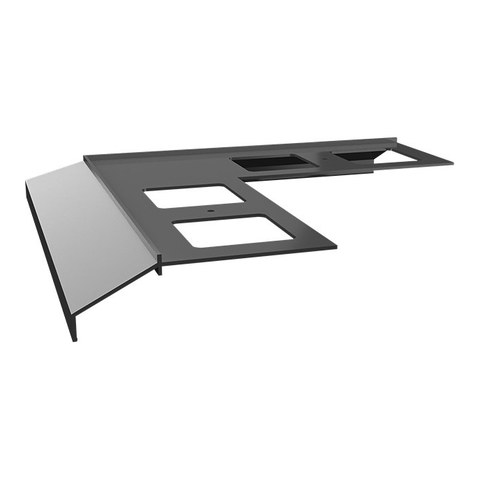
As Westermayr offers complete profile solutions, you can buy not only straight profiles from us but also corner profiles, connectors and wall end pieces. Drainage system for terraces Westermayr.
